By Amofokhai Williams
The protracted political crisis in Rivers State has reached a boiling point once again as the state House of Assembly, led by Speaker Martins Amaewhule, commenced fresh impeachment proceedings against Governor Siminalayi Fubara and his deputy, Ngozi Odu, on January 8, 2026.
This development, marking the third such attempt since Fubara assumed office in 2023, stems from allegations of gross misconduct, including persistent violations of peace agreements brokered by President Bola Tinubu, unauthorized spending outside approved budgets, and failure to present the 2026 appropriation bill.
The notice, signed by 26 lawmakers loyal to Federal Capital Territory Minister Nyesom Wike, gives Fubara seven days to respond, invoking Section 188 of the 1999 Constitution.
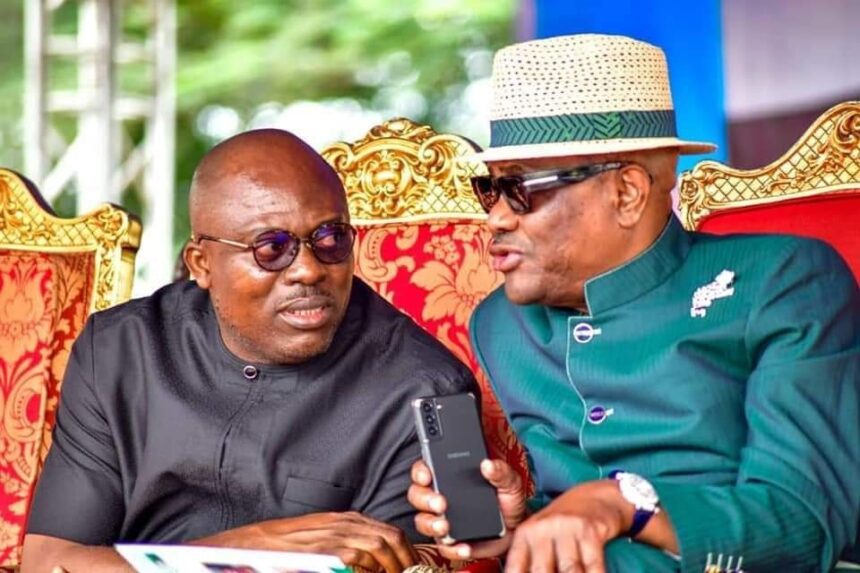
This latest escalation follows a period of renewed public acrimony between Wike and Fubara, which reignited in late 2025 after Fubara’s defection to the All Progressives Congress (APC) and disagreements over budgetary processes. Wike, during his series of “thank you” visits across Rivers local government areas in early January 2026, sharply criticized Fubara for allegedly reneging on Tinubu-mediated accords, cancelling 10,000 youth jobs initiated under his administration, and referring to him derogatorily as a “barking dog.”
In response, Wike vowed that allowing Fubara a second term in 2027 would effectively end his own political career, framing the contest as one where no further “mistakes” in leadership selection would be tolerated.
The roots of this conflict lie in the classic dynamics of political godfatherism in Nigeria. Wike, having handpicked Fubara as his successor to preserve influence over Rivers’ vast oil-derived resources, expected continued control over key decisions, appointments, and finances. Fubara’s push for autonomy quickly eroded the mentor-protégé relationship, leading to defections, legal battles, and interventions, including a brief state of emergency declared by President Tinubu in March 2025 and subsequent peace deals that proved short-lived.
Stakeholders remain deeply divided. Wike’s allies, including the Amaewhule-led assembly, portray the impeachment as a constitutional imperative to address fiscal impropriety and tyranny, insisting it transcends personal vendetta. Conversely, Fubara’s supporters and some APC factions view it as a desperate power grab, with calls for stability amid reports of backing from influential APC governors who endorse Fubara’s potential 2027 re-election bid. Public sentiment, echoed on social media and in commentaries, increasingly expresses fatigue, with figures like Senator Shehu Sani likening the feud to an intractable Middle East conflict and others urging Wike to “let Fubara breathe” for the sake of governance.
Economically and politically, the implications are severe. Rivers State, a cornerstone of Nigeria’s oil production, has seen stalled projects, investor hesitation, and governance paralysis amid over 90 lawsuits and budgetary impasses. Nationally, the crisis tests President Tinubu’s mediation credibility and exposes fractures within the APC, particularly as Fubara’s defection was intended to bolster the party’s South-South foothold but has instead fueled intra-party tensions.
Analytically, the impeachment’s success hinges on procedural adherence and federal tolerance. Past attempts faltered due to interventions and legal hurdles, and with Fubara now aligned with the ruling party-evident in his recent international engagements alongside Tinubu, the process may face significant resistance. Wike’s aggressive strategy leverages assembly control and grassroots mobilization but risks alienating broader alliances ahead of 2027.
Ultimately, this saga underscores Nigeria’s institutional frailties, where personal loyalties often overshadow constitutional governance. Without genuine reconciliation prioritizing Rivers’ development over individual ambitions, the state risks further instability, potentially dragging national politics into deeper turmoil. As proceedings unfold in the coming days, all eyes remain on whether dialogue or confrontation will prevail.