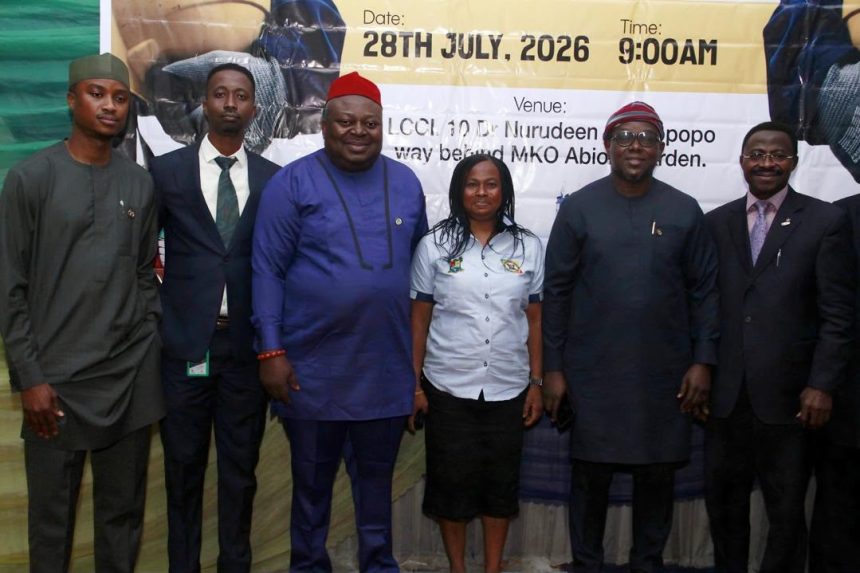
The Lagos State Government, through the Lagos Safety Commission, has convened a stakeholder forum aimed at fostering a stronger culture of safety among facility managers and safety professionals in the state.
The initiative seeks to deepen collaboration and uphold standards among safety stakeholders in order to prevent avoidable fatalities in the built environment, particularly in high-rise buildings.
Speaking at the forum themed “Safe Building, Protected Workforce,” the Director-General of the Lagos Safety Commission, Mr Lanre Mojola, emphasised the need to integrate facility management and safety considerations into building designs from the outset.
“This theme, ‘Safe Building, Protected Workforce,’ is very personal to me, having spent over a decade on the front lines of facility management in Nigeria before having the privilege of leading the Safety Commission. I have seen firsthand how buildings live, how they age, how they operate, and how they are managed and maintained. I have seen the whole life-cycle costing of brand-new buildings and how, within a very short period, they start to fall apart, particularly in this country,” he said.
Mojola described buildings as dynamic, living ecosystems that must be tested daily through operational discipline, routine maintenance, electrical and mechanical checks, vertical transportation inspections, and fire system readiness.
“Every failure, fire outbreak, or avoidable workplace incident we witness across our mega cities is a stark reminder that safety cannot be treated as an afterthought or a mere tick-box exercise. It is the core operational framework that protects lives, preserves asset value, and maintains public trust,” he stated.
He highlighted global best practices requiring every facility manager to acquire basic safety training and certification, thereby strengthening the direct link between safety, security, and facility management.
“When we speak of a protected workforce, we are looking at how to ensure that the crews on the roof, the painters on the scaffold, the cleaners, and the third-party contractors executing high-risk tasks are safe. We are protecting them from injuries and accidents, some of which could lead to fatalities,” he stressed.
In his keynote address, the Technical Adviser to the Lagos Safety Commission, Mr Seun Awojobi, described the engagement as a valuable opportunity to collaborate and develop practical, implementable solutions that will strengthen construction safety, facility management, and occupational health across the state.
“The theme of this year’s engagement speaks directly to our collective responsibility. We reflect our shared duty to ensure that every structure is built to the highest safety standard and that every worker who reports for duty each morning returns home unharmed to their family at the close of work every day. For the Safety Commission, this is not a slogan; it is a covenant we have with the good people of Lagos, and we take it with the utmost seriousness,” he said.
Awojobi noted that as Lagos continues to expand as Africa’s leading economic and commercial hub—with rising skylines, growing industries, high-rise buildings, and an expanding workforce—it is essential to harness the economic opportunities while upholding the highest standards of safety, quality, and regulatory compliance.
He reaffirmed the Commission’s commitment to promoting a proactive safety culture through inspections, collaboration, stakeholder engagement, capacity building, public enlightenment, and consistent enforcement of safety regulations.
Guest speaker Mr Lekan Akinwumi underscored the power of collaboration between facility managers and safety professionals. He noted that the workplace should be a place of comfort supported by a chain of collaboration that integrates facility management with occupational safety.
In their goodwill messages, the President of the Institute of Safety Professionals of Nigeria (ISPON), Dr Stephen Udenzi; the President of the Association of Facility Management Practitioners of Nigeria (AFMPN), Dr Olumide Aina; and the Vice President of the International Facility Management Association (representing the President), Mr Hakeem Olaonipekun, all stressed that collaboration is key to sustainable development in the built environment. They urged organisations in the sector to adopt the highest ethical standards without compromise and called on the Commission and other regulatory bodies to ensure strict safety compliance.
Other guest speakers focused on managing safety in high-rise buildings and strategies for emergency preparedness to prevent disasters.