By Amofokhai Williams
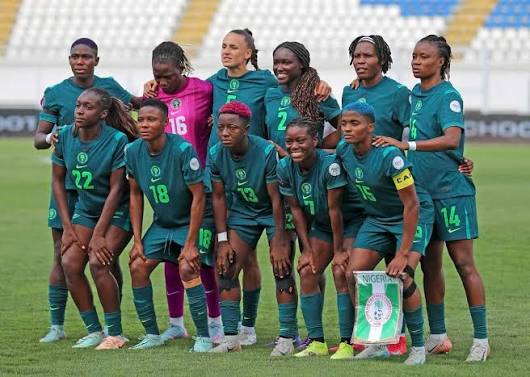
When the 2026 Women’s Africa Cup of Nations (WAFCON) kicks off in Morocco on July 25, all eyes will be on one team—the Super Falcons of Nigeria.
As defending champions and Africa’s most successful women’s national team, the Falcons are once again the benchmark against which every other contender will be measured. The tournament, which runs until August 16, is not just another continental championship; it is a battle for supremacy, World Cup qualification and the chance to dethrone a side that has dominated African women’s football for nearly three decades.
Nigeria arrive in Morocco carrying the weight of history. The Super Falcons have won a record 10 WAFCON titles, including a dramatic comeback victory over hosts Morocco in the last final to reaffirm their status as the undisputed queens of African football. Their consistency has been unmatched, making them the tournament’s most successful and most feared team.
However, title defence may prove tougher than ever.
For the first time, WAFCON will feature 16 teams, expanding from the previous 12-team format. The Confederation of African Football (CAF) believes the expansion reflects the rapid development of women’s football across the continent. While the larger format creates more opportunities for emerging nations, it also means Nigeria must negotiate a longer and potentially more demanding route to an unprecedented 11th continental title.
The Super Falcons have been drawn in Group C alongside Zambia, Egypt and tournament debutants Malawi. On paper, Nigeria remain favourites to top the group, but there will be little room for complacency.
Their opening fixture against Malawi presents an opportunity to settle quickly into the tournament, yet it also carries the pressure that accompanies every defending champion’s first game. Zambia, arguably Nigeria’s toughest group-stage opponent, have emerged as one of Africa’s fastest-rising forces, while Egypt possess enough experience to trouble any side capable of underestimating them.
Head coach Justine Madugu understands that expectations in Nigeria extend beyond merely qualifying for the knockout rounds. Anything short of lifting the trophy will be viewed as a disappointment by millions of football-loving Nigerians.
Fortunately, the Super Falcons still boast one of the strongest squads on the continent. Led by experienced stars and complemented by exciting younger talents making their mark in Europe and the Nigeria Women’s Football League, the team possesses quality across every department. Recent preparations, including training camps and international friendlies, have focused on improving tactical flexibility and squad cohesion ahead of the title defence.
Yet Nigeria’s dominance is no longer guaranteed.
Morocco have invested heavily in women’s football and will enjoy passionate home support once again. South Africa continue to build on their recent successes, while Zambia have become genuine title contenders through an exciting blend of pace, technical ability and attacking football. Ghana, Cameroon and Senegal also arrive believing they can challenge for continental honours.
This growing competitiveness is perhaps the biggest success story of African women’s football.
Unlike previous decades when Nigeria often overwhelmed opponents with ease, today’s WAFCON features several nations capable of matching the Super Falcons physically, tactically and technically. That shift has transformed the championship into one of the continent’s most unpredictable sporting events.
Beyond continental glory, the stakes are even higher because WAFCON doubles as Africa’s qualification tournament for the 2027 FIFA Women’s World Cup in Brazil. The four semi-finalists will qualify automatically, making every knockout fixture potentially decisive for teams with global ambitions. For Nigeria, however, qualification alone will not satisfy expectations. The mission remains straightforward—retain the trophy and reinforce their position as Africa’s leading football nation.
Another intriguing storyline will be whether Nigeria can maintain the mentality that has defined generations of Super Falcons. Over the years, the team has built a reputation for resilience, often responding positively under pressure. Their comeback victory against Morocco in the previous final remains one of the greatest moments in WAFCON history and serves as a reminder that the Falcons rarely surrender when titles are at stake.
Commercially, WAFCON 2026 also signals another leap forward for women’s football in Africa. Increased television coverage, stronger sponsorship interest and growing fan engagement demonstrate how rapidly the women’s game has evolved. Nigeria’s popularity remains central to that growth, with the Super Falcons continuing to attract one of the tournament’s largest audiences both at home and across the African continent.
Ultimately, WAFCON 2026 is Nigeria’s title to defend and Africa’s title to win. Every challenge, every tactical adjustment and every match in Morocco will revolve around one central question: Can anyone stop the Super Falcons?
The answer will emerge over three weeks of high-quality football, but one fact remains beyond dispute. Until another nation lifts the trophy, Nigeria remain the undisputed queens of African women’s football—and every road to the WAFCON title still runs through the Super Falcons.