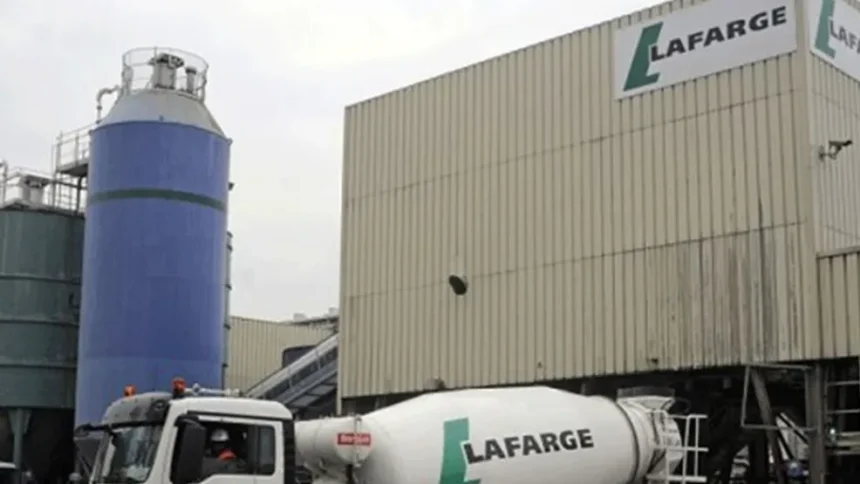
Lafarge Africa Plc has reported a staggering Profit After Tax (PAT) of N97.95 billion for the first quarter of 2026, more than double the N48.64 billion recorded in the same period of 2025, as the cement giant reaps the benefits of operational overhaul, supply chain stability, and easing macroeconomic headwinds.
The results, approved by the Board of Directors and released on Wednesday, show that net sales surged 35% year-on-year to N334.88 billion, up from N248.35 billion in Q1 2025.
Operating profit climbed 97% to N141 billion, underscoring what the company described as “volume-led revenue growth, sustained cost discipline, and prudent financial management.”
For a sector that has struggled with energy costs, currency volatility, and import bottlenecks, Lafarge’s performance is remarkable. The company’s margin expansion—from roughly 19.6% PAT margin in Q1 2025 to over 29% in Q1 2026—signals that efficiency gains are outpacing inflationary pressures.
Behind the numbers lies a strategic pivot. In late 2024, Lafarge Africa’s parent company, Holcim, sold its majority stake to Chinese building materials giant Huaxin Cement Co. Ltd. The deal, which closed in early 2025, brought new operational discipline and technical expertise to Lafarge’s Nigerian plants.
In his statement, Group Managing Director Lolu Alade-Akinyemi explicitly credited the partnership: “We will continue to leverage the industrial and technical expertise of our partner, Huaxin Building Materials Ltd, to further enhance operations and unlock additional efficiency gains.”
The company also benefited from easing macroeconomic pressures. Nigeria’s inflation rate, while still elevated, has moderated from peak levels in late 2025. The naira’s relative stability in the first quarter allowed for better import planning for gypsum and spare parts. Reduced global supply chain disruptions—particularly in shipping and freight costs—also bolstered margins.
Alade-Akinyemi noted that “sustained momentum in consumer demand” came from easing pressures and improved real incomes in key construction segments. Infrastructure spending by both federal and state governments, alongside growing housing development in urban corridors, has driven volume growth across Lafarge’s cement, readymix, and mortar product lines.
Despite the stellar results, the company struck a cautious note on the future. Global tensions, including trade disruptions and energy market volatility remain risks. Lafarge said it would maintain “disciplined capital deployment and tight cost control” while capturing growth opportunities.
Alade-Akinyemi expressed gratitude to customers and stakeholders, reaffirming the company’s commitment to “consistent performance and long-term value.”
He also emphasized Lafarge’s sustainability-led growth model, which includes carbon reduction targets and alternative fuel usage—areas where Huaxin’s industrial scale could provide further advantages.