

By Amofokhai Williams
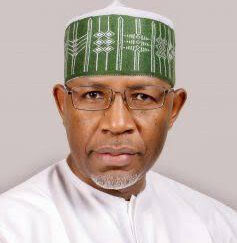
In a move that brings extensive regulatory and multilateral experience back to the nation’s apex bank, President Bola Ahmed Tinubu has nominated Lamido Abubakar Yuguda for the position of Deputy Governor of the Central Bank of Nigeria (CBN).
The nomination, announced on Wednesday in a statement by presidential spokesman Bayo Onanuga, is contingent on confirmation by the Nigerian Senate.
If confirmed, Yuguda will fill the vacancy created by the recent reassignment of former Deputy Governor Bala Bello, who was appointed as Special Adviser to the President on Political Economy.
The appointment, rooted in Section 8(1) of the CBN Act of 2007, signals the administration’s continued effort to populate the highest echelons of the monetary authority with seasoned technocrats.
Yuguda is far from a stranger to the corridors of the CBN. His career trajectory reveals a deep-seated institutional knowledge of the bank, spanning over two decades.
He began his journey in 1984 as a Senior Supervisor in the Foreign Operations Department, eventually rising through the ranks to serve as Director of the Reserve Management Department, a critical division responsible for overseeing the nation’s foreign exchange reserves, a position he held for six years before his retirement from the bank in 2016.
However, for the Nigerian financial public, Yuguda is best known for his most recent public post as the Director-General of the Securities and Exchange Commission (SEC).
Appointed to that role in 2020, he steered the capital market regulator through a period of significant post-COVID recovery and regulatory recalibration until the end of his tenure in 2024. His leadership at the SEC was marked by efforts to deepen the market and enhance investor protection.
Yuguda’s professional portfolio suggests a blend of hands-on domestic policy implementation and high-level international economics. Between 1997 and 2001, he took a sabbatical from the CBN to work as an economist in the Africa Department of the International Monetary Fund (IMF) in Washington, D.C. This experience provides him with a nuanced understanding of how Nigeria’s monetary policies are often viewed through the lens of international financial institutions and credit rating agencies.
His academic credentials complement this profile. An alumnus of Ahmadu Bello University, Zaria, where he earned a B.Sc. in Accountancy in 1983, he later obtained a master’s degree in Money, Banking and Finance from the University of Birmingham in the United Kingdom.
He is a Fellow of the Institute of Chartered Accountants of Nigeria (ICAN) and holds the prestigious Chartered Financial Analyst (CFA) charterholder designation, a rare combination that underscores his analytical depth in both accounting and investment management.
The nomination comes at a delicate time for the CBN, which has been undergoing significant reforms aimed at stabilizing the Naira, taming inflation, and unifying the foreign exchange market.




