

By Amofokhai Williams
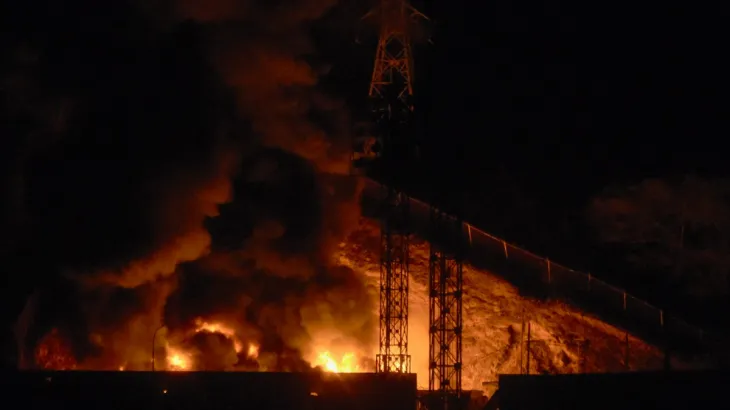
In a stunning escalation of tensions, President Donald Trump announced early Saturday that U.S. military forces have captured Venezuelan President Nicolás Maduro and his wife, Cilia Flores, following a large-scale strike on targets in and around Caracas.
The operation, described by Trump as conducted in conjunction with U.S. law enforcement, marks the most direct U.S. intervention in Latin America since the 1989 invasion of Panama.
Trump’s full statement, posted on Truth Social shortly after 4 a.m. Eastern Time, read:
“The United States of America has successfully carried out a large scale strike against Venezuela and its leader, President Nicolas Maduro, who has been, along with his wife, captured and flown out of the Country. This operation was done in conjunction with U.S. Law Enforcement. Details to follow. There will be a News Conference today at 11 A.M., at Mar-a-Lago. Thank you for your attention to this matter! President DONALD J. TRUMP.”
U.S. officials, speaking anonymously to multiple outlets including CBS News, confirmed that the capture was executed by the Army’s elite Delta Force unit, known for high-risk counterterrorism missions.
No American casualties were reported, though Venezuelan authorities claimed strikes hit civilian areas and are compiling reports of deaths and injuries.
The strikes come after months of intensifying U.S. pressure on Maduro’s government, which Washington has long accused of running a “narco-state” involved in drug trafficking.
Since September 2025, U.S. forces have conducted over 30 strikes on alleged drug-smuggling vessels in the Caribbean and Pacific, killing more than 110 people, and imposed a blockade on Venezuelan oil tankers. A CIA-led drone strike on a coastal port facility in December marked the first known U.S. attack on Venezuelan soil.
Venezuelan officials swiftly condemned the action as “military aggression.” Vice President Delcy Rodríguez, in an address on state television, demanded “proof of life” for Maduro and his wife, stating their whereabouts were unknown.
Defense Minister Vladimir Padrino López vowed resistance, deploying forces nationwide and declaring the strikes the “worst aggression” in Venezuela’s history. Maduro had earlier declared a national state of emergency.
Regional reactions were immediate. Colombian President Gustavo Petro condemned the strikes as missile attacks on Caracas and called for an emergency UN Security Council meeting, while deploying forces to the border in anticipation of potential refugee flows.
The operation raises profound legal and diplomatic questions, including whether it was authorized by Congress and its implications under international law.
Analysts compare it to the 1989 Panama intervention that removed Manuel Noriega, who faced U.S. drug charges.
Maduro, indicted in the U.S. on narco-terrorism charges with a $50 million bounty (doubled last year), has denied the allegations, accusing Washington of seeking control over Venezuela’s vast oil reserves.
Trump is set to provide further details at a press conference from his Mar-a-Lago residence in Florida.




