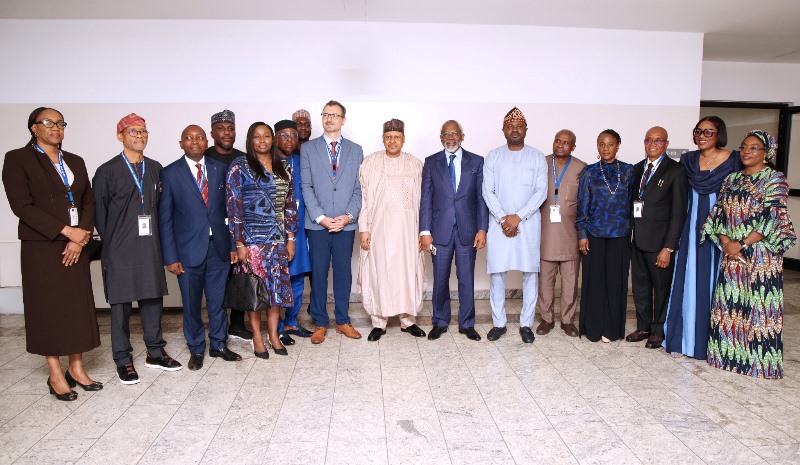
The Federal Government has inaugurated a Presidential Task Force on Ebola Virus Disease (EVD) Preparedness as part of efforts to sustain Nigeria’s zero-case status and strengthen the country’s capacity to respond to potential public health threats.
Speaking at the inauguration ceremony held at the State House on Thursday, the Chief of Staff to the President and Chairman of the Task Force, Femi Gbajabiamila, said the government remains committed to preventing any outbreak of the disease while positioning Nigeria as a leader in epidemic preparedness across Africa.
Gbajabiamila noted that no Ebola case has been reported in the country, describing the development as encouraging but stressing the need for vigilance and proactive measures.
He said the government’s approach is centred on prevention, drawing lessons from the 2014 Ebola outbreak that tested Nigeria’s public health response system.
“We have inaugurated the committee on Nigeria’s preparedness for Ebola Virus Disease. There are currently no reported cases in the country, which is good news. However, all hands must be on deck to ensure that prevention remains our primary focus,” he said.
According to him, the task force has already established several structures and subcommittees to address critical areas of preparedness, including surveillance, border management and rapid response coordination.
Gbajabiamila emphasised that Nigeria is determined to take a leading role in Africa’s response to emerging infectious diseases rather than merely reacting to developments elsewhere.
“We do not want a repeat of the circumstances that followed the 2014 outbreak. Today, we are putting permanent systems in place so that if an outbreak occurs years from now, the country will have ready-made structures to respond effectively,” he added.
The Chief of Staff highlighted enhanced collaboration between the Federal Government and states hosting international airports, including Lagos, Kano, Rivers and Enugu, as well as the Federal Capital Territory, to strengthen monitoring and emergency response capabilities.
He also underscored the importance of securing Nigeria’s land borders, noting that agencies such as the Nigeria Immigration Service, the Border Management Agency and border communities are actively involved in surveillance and preparedness efforts due to the high volume of cross-border movement.
Gbajabiamila disclosed that the Nigeria Centre for Disease Control and Prevention (NCDC) will provide overall technical leadership for the task force, while dedicated committees will focus on border management, immigration control and disease surveillance.
The inauguration brought together key stakeholders in Nigeria’s health and security sectors, including the Minister of Information and National Orientation, Mohammed Idris; Minister of Interior, Olubunmi Tunji-Ojo; Director-General of the NCDC, Dr Jide Idris; and Managing Director of the Federal Airports Authority of Nigeria (FAAN), Olubunmi Kuku.
Also present were the World Health Organization (WHO) Representative in Nigeria, Dr Pavel Ursu, senior health officials from Lagos, Rivers, Enugu and the FCT, as well as representatives of civil society and public health organisations.
The move underscores the Federal Government’s determination to strengthen disease surveillance, improve emergency preparedness and ensure that Nigeria remains equipped to prevent and contain any future Ebola outbreak.