Safety practitioners, government officials, and security leaders have issued a strong call for personal accountability among public and private sector heads, insisting that a robust and sustainable safety culture in Lagos State and Nigeria can only be built when leadership sets the tone from the top.
The message resonated throughout the maiden edition of the Lagos Safety Outlook 2026, held under the theme “Leading from Within” in Ikeja on Tuesday.
Attendees stressed the urgent need for a fundamental shift in how safety is viewed, moving away from a regulatory afterthought to a core leadership responsibility.
Mr Akinlara Babalola, safety consultant to the Lagos State Safety Commission and Managing Director of Green Lantern Services, set the tone by arguing that effective safety leadership must originate internally within organisations and institutions. He rejected the notion that safety is solely the domain of regulators or reactive measures such as alarms.
Babalola reaffirmed the Lagos State Government’s ambition to maintain a “global gold standard” in the protection of lives and property, describing safety as a critical pillar of the state’s competitiveness and international appeal. Achieving this, he said, demands collective responsibility and proactive leadership at every level.
“Safety does not begin with alarms or regulators alone; it starts with leadership,” Babalola stated.
He emphasised that every stakeholder must treat safety as both a personal and shared obligation, warning that viewing it as “nobody’s business” erodes institutional resilience and endangers lives and assets.
Babalola positioned the Lagos Safety Outlook as a new annual platform for policy dialogue, leadership engagement, and strategic thinking, designed to embed stronger safety culture not only in Lagos but across Nigeria.
Lanre Mojola, Director-General of the Lagos State Safety Commission, reinforced the central theme, describing safety as fundamentally a leadership issue.
While acknowledging the role of regulations and technical systems, he insisted that lasting impact comes through culture, which must be championed from the highest levels.
“If safety does not thrive under leadership, then we have a cause to worry,” Mojola said.
He urged leaders to conduct regular reality checks within their organisations, cautioning that leadership failure inevitably leads to safety failure.
Dr Stephen Udenze, President of the Safety Professionals of Nigeria, framed leadership in terms of accountability.
“Professional leadership is defined by accountability rather than excuses,” he said, adding that leaders must own outcomes, positive or negative, for actions taken by those under their authority.
This mindset, he noted, cultivates a strong safety culture sustained by disciplined, dedicated safety teams committed to best practices across workplaces and institutions.
Lagos State Commissioner of Police, Mr Olorundare Jimoh, highlighted the inseparable link between safety and security.
He explained that police officers are trained to safeguard lives and property through integrated enforcement of both domains and welcomed deepening collaboration between safety and security agencies.
Jimoh called on citizens and organisations to uphold safety standards through collective vigilance, saying this shared commitment is vital for protecting lives and assets.
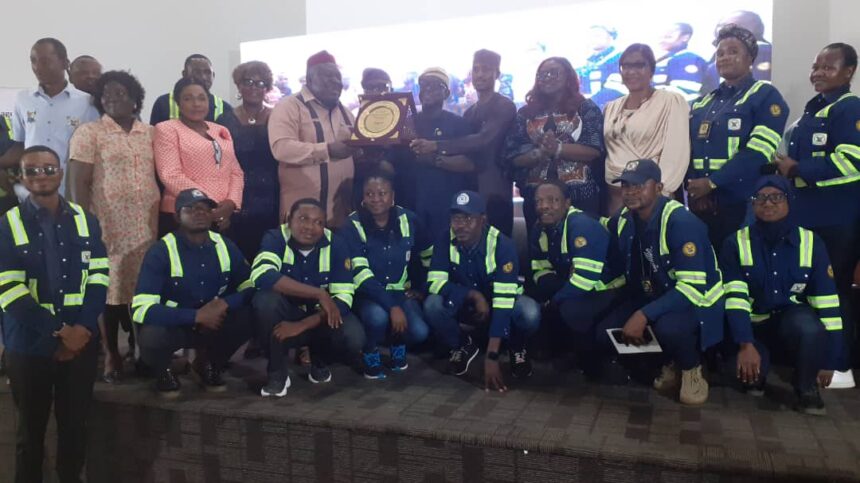
The event ended with the presentation of Leadership Excellence Awards in Safety. Recipients included Lagos State Safety Commission Director-General Lanre Mojola, Mr Seun Awojobi, and other prominent stakeholders recognised for their contributions to advancing safety leadership and culture in the state.