

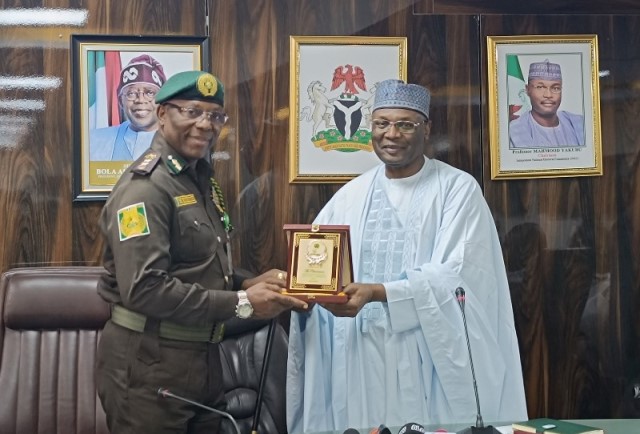
In a historic step toward inclusive democracy, the Nigerian Correctional Service (NCoS) and the Independent National Electoral Commission (INEC) initiated discussions to grant voting rights to over 81,000 incarcerated Nigerians, more than 66% of whom are awaiting trial and presumed innocent.
During a landmark meeting in Abuja, NCoS Controller General Sylvester Ndidi Nwakuche Ofori urged INEC to address the “often-overlooked” rights of inmates, stating, “Anybody can find themselves on the other side of the law. We need to be careful how they are treated. They have rights, and one of those rights is the right to vote.”
Ofori, on his first official visit to INEC, emphasized that incarceration should not strip citizens of their democratic rights, declaring, “The fact that they are in incarceration should not strip them of their citizenship.”
He cited a Benin court ruling and National Assembly resolutions supporting inmate voting, urging INEC to explore mechanisms for participation without compromising security or transparency.
“I am here to see how we can, even if not immediately, in the nearest future, extend this fundamental right to inmates,” he said.
INEC Chairman Professor Mahmood Yakubu welcomed the initiative, noting that countries like Ghana, Kenya, and South Africa already allow inmate voting.
Referencing 2014 and 2018 court rulings affirming voting rights for certain inmates, particularly those awaiting trial, Yakubu highlighted past efforts, including a joint INEC-NCoS technical committee to assess logistics like voter registration and polling unit setup.
“Working together, we can seize the opportunity of ongoing electoral reform for a clear legal provision that will specifically cover citizens serving time in our correctional facilities,” he said, stressing the need for National Assembly backing.
Both leaders acknowledged challenges, including security concerns and campaign access in prisons, but expressed optimism about collaboration with lawmakers and groups like the Carmelite Prisoners’ Interest Organization (CAPIO).
Ofori underscored the broader societal impact, stating, “Inmates are part of our society. If we deny them the right to participate in democracy, we deny ourselves the opportunity to make our democracy truly representative.”




