

By Amofokhai Williams
Dolly Parton, the country music icon whose songs, distinctive voice and larger-than-life personality made her one of the most recognisable entertainers in the world, has died at the age of 80.
Parton’s family confirmed her death on Tuesday, saying she died peacefully in Nashville, Tennessee.
Her public relations team described her as a global icon and humanitarian whose career extended across music, songwriting, acting, theatre, literature and philanthropy.
Her nephew, Brian Seaver, announced the death in a video posted to Parton’s social media accounts. He said the family was deeply saddened but added that Parton had “lived in the light”, reflecting the family’s belief that her life should ultimately be remembered with gratitude.
The cause of death was not immediately disclosed.
Parton’s death came after a period of health difficulties that had forced her to cancel or miss several public appearances.
Just days before her death, she had spoken publicly about her health, saying she was still recovering while continuing to work on several projects.
Her passing ends a career that transformed her from a child raised in rural Tennessee into one of the most successful and influential figures in country music.
Born on January 19, 1946, Parton was the fourth of 12 children in a family that lived in the Great Smoky Mountains of Tennessee. She began performing as a child and made her first appearance at the Grand Ole Opry at 13.
After graduating from high school in 1964, she moved to Nashville, where she began building a career as a songwriter and performer. Her breakthrough came after she joined The Porter Wagoner Show, working alongside country star Porter Wagoner and establishing herself as a songwriter capable of producing hits for herself and other performers.
She released her debut album, Hello, I’m Dolly, in 1967.
Over the decades that followed, Parton produced a catalogue that included “Jolene”, “Coat of Many Colors”, “9 to 5” and “I Will Always Love You”.
“I Will Always Love You”, which Parton wrote about her professional separation from Wagoner, became a hit in her own recording and later reached an enormous global audience through Whitney Houston’s 1992 rendition.
Her songwriting became one of the defining elements of her career. Reuters reported that Parton wrote thousands of songs, beginning with her songwriting as a child and continuing throughout her life.
Her success also extended into film and television. She made her major film debut in the 1980 comedy 9 to 5, starring alongside Jane Fonda and Lily Tomlin. She also wrote and performed the film’s title song, which became a major hit and earned an Academy Award nomination.
She subsequently appeared in films including The Best Little Whorehouse in Texas and Steel Magnolias.
Parton’s achievements were recognised with some of the highest honours in American music. She won multiple Grammy Awards and was inducted into both the Country Music Hall of Fame and the Rock & Roll Hall of Fame.
But her influence was not confined to entertainment.
Through the Dollywood Foundation, Parton established the Imagination Library, a literacy initiative that provides books to children. The programme eventually expanded beyond the United States and became one of the most prominent charitable initiatives associated with an entertainer.
Her philanthropy also extended to medical research. In 2020, she donated $1 million to Vanderbilt University Medical Center to support COVID-19 research, funding that became associated with research contributing to the development of the Moderna vaccine.
She also built a major business empire around Dollywood, the Tennessee theme park that became one of the state’s best-known tourist attractions and an enduring extension of Parton’s Appalachian identity.
Parton frequently drew on her upbringing in her music, using stories of family, poverty, faith, love and rural life to create songs that connected with audiences well beyond the traditional country music audience.
Her public image was equally distinctive. The combination of glamour, humour, warmth and self-awareness became part of her appeal, while her songwriting ensured that the personality never overshadowed the music.
Parton’s private life was marked by her long marriage to Carl Dean, whom she married in 1966. Dean died in March 2025 at the age of 82 after nearly six decades of marriage. Her family statement on Tuesday listed Dean among those who had preceded her in death.
Parton continued working after Dean’s death, even as she acknowledged the emotional and physical toll of the period that followed.
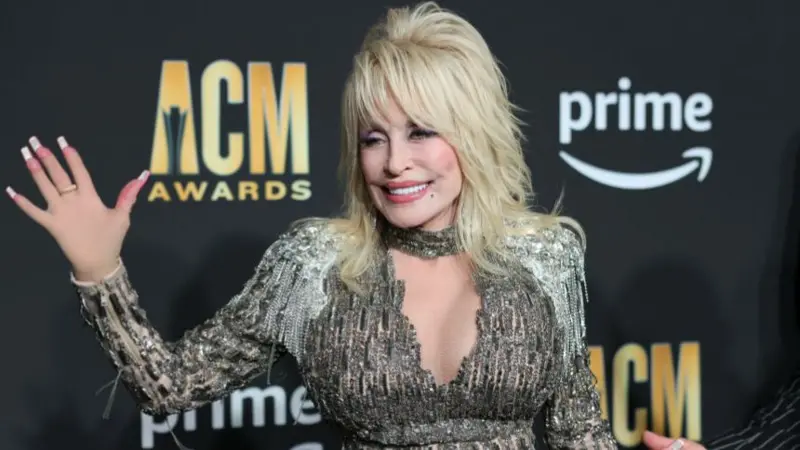
On August 19, she accepted the Academy of Country Music’s Poet’s Award virtually after health issues prevented her from attending the ceremony in person. In her remarks, she described songwriting as a source of therapy and a way of expressing herself.
Her death now leaves behind a musical catalogue that has crossed generations and genres, as well as a philanthropic legacy reaching millions of children.
Parton’s public relations team said her songs would continue to resonate with people of all ages and that her charitable work would have a lasting impact.
With her death, country music loses one of its defining voices, while the entertainment industry loses an artist whose career extended far beyond the recording studio.




