

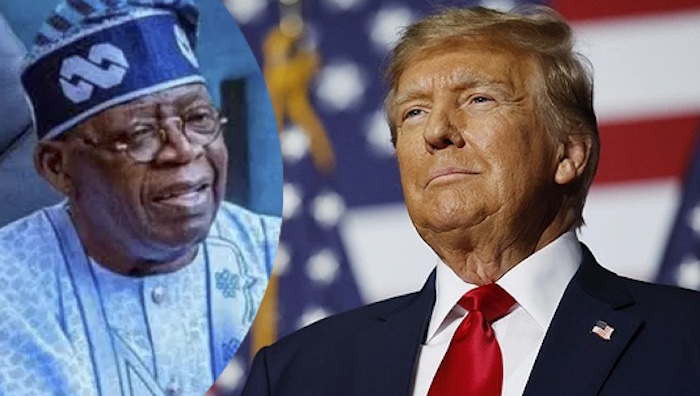
By Amofokhai Williams
In a pointed rebuttal to U.S. President Donald Trump’s designation of Nigeria as a “Country of Particular Concern” for religious freedom violations, President Bola Tinubu affirmed his administration’s unwavering commitment to safeguarding religious liberties across the nation’s diverse faiths.
The exchange, unfolding on social media and in official statements, underscores deepening tensions between the two nations over Nigeria’s handling of sectarian violence and human rights.
Trump‘s announcement, posted on Truth Social late Thursday, labeled Nigeria a CPC—a U.S. State Department category reserved for governments deemed to engage in or tolerate “particularly severe violations of religious freedom.”
The move revives a contentious issue from Trump’s first term, when Nigeria was similarly flagged in 2020 for alleged persecution of Christians amid clashes with Islamist militants in the north.
Drawing on reports of targeted killings and displacement, Trump urged Congress to prioritize the issue, stating it reflects “widespread intolerance” against Christian communities.
This designation could trigger sanctions or aid restrictions, though implementation often hinges on diplomatic negotiations.
Tinubu, responding swiftly via his official X account, rejected the characterization as a misrepresentation of Nigeria’s “national reality.”
In a statement signed as President of the Federal Republic, he emphasized the constitutional protections enshrined in Nigeria’s 1999 charter, which guarantee freedom of religion for all citizens.
“Since 2023, our administration has maintained an open and active engagement with Christian and Muslim leaders alike and continues to address security challenges which affect citizens across faiths and regions,” Tinubu wrote.
He highlighted ongoing efforts to combat insecurity, including banditry and insurgency by groups like Boko Haram, which have claimed thousands of lives regardless of faith.
The president’s remarks come amid a surge in violence in Nigeria’s Middle Belt and northern regions, where farmers, predominantly Christian and herders, often Muslim, clash over resources, exacerbated by climate change and weak governance.
While extremists exploit these divides, Tinubu stressed that “religious freedom and tolerance have been a core tenet of our collective identity,” pledging deeper cooperation with the U.S. and international partners to protect vulnerable communities.
Nigeria’s Foreign Ministry echoed this stance in a Friday briefing, dismissing Trump’s claims of “widespread killings of Christians” as overstated and ignoring the government’s multi-faith initiatives.
“The Federal Government has reaffirmed its commitment to protecting religious freedom and promoting tolerance among all Nigerians,” officials said, pointing to interfaith dialogues and security deployments as evidence of progress.
As bilateral talks loom, both leaders face domestic pressures: Trump to deliver on evangelical voter promises, and Tinubu to quell unrest that has displaced over 3 million Nigerians.
For now, the president’s words ring with resolve: “Nigeria opposes religious persecution and does not encourage it.”



