

By Amofokhai Williams
In a bold escalation of counterterrorism efforts, the United States military launched precision missile strikes against Islamic State (ISIS) targets in northwestern Nigeria on Christmas Day, resulting in the deaths of multiple terrorists and marking a significant collaborative blow against transnational extremism in West Africa.
The operation, directed by President Donald Trump and executed by U.S. Africa Command (AFRICOM), targeted two known ISIS camps in Sokoto State, near the border with Niger, amid growing concerns over the group’s expansion and attacks on civilian populations.
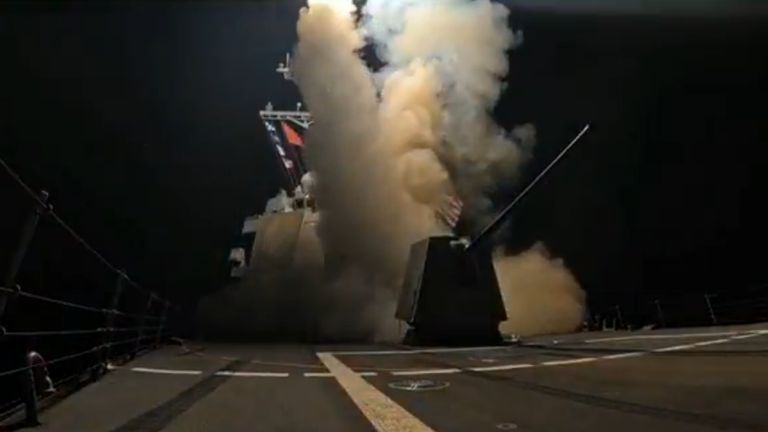
The strikes involved more than a dozen Tomahawk cruise missiles fired from a U.S. Navy vessel positioned in the Gulf of Guinea, following weeks of intensive intelligence-gathering through surveillance flights that began in late November.
AFRICOM’s initial assessment confirmed that the attacks successfully neutralized multiple ISIS militants at the camps, with no reports of civilian casualties.
“U.S. Africa Command is working with Nigerian and regional partners to increase counterterrorism cooperation efforts related to ongoing violence and threats against innocent lives,” stated Gen. Dagvin Anderson, commander of AFRICOM.
“Our goal is to protect Americans and to disrupt violent extremist organizations wherever they are.”
President Trump announced the operation in a late-night post on Truth Social, framing it as a decisive response to ISIS militants who he accused of “targeting and viciously killing, primarily, innocent Christians at levels not seen for many years, and even Centuries!”
He emphasized that the strikes were carried out at his direct command as Commander in Chief, warning that further actions would follow if necessary to prevent the spread of “radical Islamic terrorism.”
The Pentagon released video footage of the missile launches, underscoring the precision and scale of the assault.
On the Nigerian side, the operation was conducted in full coordination with local authorities, highlighting a deepening partnership in intelligence sharing and strategic planning.
Maj.-Gen. Samaila Uba, Director of Defence Information for the Nigerian Armed Forces, described the strikes as a demonstration of the Federal Government’s “unwavering resolve” to confront transnational terrorism and prevent foreign fighters from establishing footholds in the country.
In a statement, Uba noted that the action followed credible intelligence and was aimed at degrading the terrorists’ capabilities while minimizing collateral damage.
Nigeria’s Ministry of Foreign Affairs further affirmed the collaboration, with spokesperson Kimiebi Imomotimi Ebienfa stating that the partnership aligns with international law and mutual respect for sovereignty.
“Terrorist violence against any religious or ethnic group remains an affront to Nigeria’s values and international peace,” Ebienfa added, emphasizing the government’s commitment to protecting civilians regardless of faith or ethnicity.
Initial reactions from Nigerian officials have been positive, with some reports suggesting the response “stunned” President Trump in its supportive tone, potentially paving the way for expanded joint operations.
The targeted militants are believed to be affiliated with ISIS-Sahel, a branch of the Islamic State that has increasingly operated in the porous border regions between Nigeria, Niger, and other Sahelian countries.
Northwest Nigeria has long been plagued by a mix of banditry, kidnapping, and jihadist incursions, which have intertwined with broader insurgencies like those led by Boko Haram and its ISIS-aligned splinter, Islamic State West Africa Province (ISWAP), in the northeast.
Analysts point out that while the strikes address immediate threats, they occur against a backdrop of complex insecurity, where violence has claimed thousands of lives-impacting both Christian and Muslim communities, despite Nigerian denials of targeted religious persecution.
The operation follows months of advocacy from U.S. evangelical organizations and Republican lawmakers urging action against alleged attacks on Christians in Nigeria.
Defense Secretary Pete Hegseth praised the mission, noting that the U.S. military stands “always ready” and expressing appreciation for Nigerian cooperation, while hinting at potential future strikes.
This marks the second U.S. action against ISIS affiliates in recent weeks, after airstrikes in Syria earlier in December.




